
Deep Journal Prompts for Emotional Clarity
Last updated: October 10, 2026
Quick Answer: Deep journal prompts for emotional clarity usually work best in 10 minutes and one page, because that is enough time to name what you feel, what triggered it, and what you need next without turning the exercise into rumination. If you are stuck in a loop of “I’m fine” on the outside and a knot of confusion on the inside, the right prompt should slow the blur down enough to become visible.
Deep journal prompts for emotional clarity are most useful when they do one thing well: help you name what you feel, what triggered it, and what you need next. If you are stuck in a loop of “I’m fine” on the outside and a knot of confusion on the inside, the right prompt should slow the blur down enough to become visible. For practical guidance on stress and coping, see the National Institute of Mental Health and the American Psychological Association.
I write about reflective practice and emotional regulation, and I care less about pretty prompts than about prompts that produce usable insight. The goal is not to write beautifully for 20 minutes. The goal is to leave the page with a cleaner read on your own mind.
What deep journal prompts are actually for
Deep journal prompts are for separating emotion from story. That distinction matters because the story is often loud and wrong while the feeling is quieter and more accurate. A good prompt helps you tell the difference.
Here is the simplest rule I use: start with the event, move to the body, then move to meaning. For example, “My manager skipped my idea in the meeting” is the event. “My chest tightened and I went hot in my face” is the body. “I’m invisible here” is the meaning. That last line may be true, or it may be an old wound talking. You do not find out by thinking harder in circles. You find out by writing.
The strongest prompts for emotional clarity are usually not generic mood questions like “How do I feel today?” They are sharper. They ask for the moment the feeling changed, the fear underneath the reaction, the need that was not met, and the boundary that was crossed or wished for. If you only ask broad questions, you get broad answers: “sad,” “stressed,” “tired.” Those are useful only as a starting point.
The downside is that deep prompts can stir up more than you wanted. If you are in crisis, highly activated, or dealing with trauma that feels raw, keep the prompts short and concrete, and consider speaking with a licensed mental health professional. The page of a notebook is not a substitute for support when the material is too hot to handle alone; the NIMH and the APA both recommend getting help when stress becomes hard to manage.
Which prompts work best for emotional clarity?

The most effective prompts are often the ones that move from symptom to source in 3 to 5 minutes, not the ones that ask you to write a memoir. Clarity comes from precision, and precision comes from narrow questions.
I would choose prompts in four buckets:
- Naming prompts — “What am I feeling, exactly?”
- Trigger prompts — “What happened right before this changed?”
- Meaning prompts — “What am I telling myself this means?”
- Need prompts — “What do I need that I am not asking for?”
A generic prompt like “Why am I upset?” often fails because it invites a courtroom, not an inquiry. The mind builds a defense, then a case, then a verdict. That is not clarity. A better version is: “What is the sharpest moment in the last 24 hours when this feeling spiked, and what did I need there?” That question gives the mind a fence to work inside.
I also prefer prompts that use bodily evidence. The body is often the first honest witness. A line like “Where do I feel this in my body, and what does that sensation seem to want me to know?” can reveal whether you are dealing with grief, anger, shame, or simple overload. A flutter in the stomach does not mean one thing by itself, but it often tells you the nervous system is involved before the story catches up.
The trade-off is that body-based prompts can feel vague if you are dissociated or very analytical. In that case, go concrete: name the time, place, person, and exact phrase that landed badly. Emotional clarity usually arrives faster through specifics than through philosophy.
12 deep journal prompts for emotional clarity
These prompts work because each one pulls on a different thread. Use one prompt per entry, not all twelve at once. If you answer too many in one sitting, you will blur the signal again.
-
What am I feeling right now, and what is the most precise word I can use?
Not “bad.” Not “off.” Try irritated, ashamed, lonely, resentful, cornered, grief-struck, embarrassed. -
What happened in the hour before this feeling showed up?
Emotional states often have a clean trigger even when the mind wants to make them abstract. -
What part of this reaction feels bigger than the situation?
This often points to an old bruise, not just the current event. -
What story am I telling myself about what this means?
For example: “I was ignored, so I do not matter.” -
What evidence supports that story, and what evidence weakens it?
This prompt helps separate fact from assumption without gaslighting yourself. -
What feeling am I most reluctant to admit is here?
Anger often hides under hurt. Shame often hides under perfectionism. -
What would I say this feeling is asking for if it could speak plainly?
Rest, apology, distance, reassurance, honesty, repair. -
Where do I feel this in my body, and what changes when I breathe into that area for 30 seconds?
The body can reveal whether a feeling is static or shifting. -
What am I afraid would happen if I stopped managing this feeling?
This often surfaces the real fear beneath control. -
What boundary may have been crossed, ignored, or not stated clearly enough?
Emotional fog often lifts when a boundary becomes visible. -
If I believed my feeling was valid, what would I do next?
This moves you from interpretation to action. -
What do I need to forgive myself for in this situation, even if nothing was “my fault”?
Many people carry shame for having needs, reactions, or limits.
I would not use these as a daily checklist, and if you want to use them regularly, it is wise to consult a licensed mental health professional and start with a prompt that fits the moment. They are better treated like tools in a box. If jealousy is the problem, use the story prompt and the need prompt. If numbness is the problem, use the body prompt and the fear prompt. Match the question to the emotional shape in front of you.
A simple structure that makes the page useful
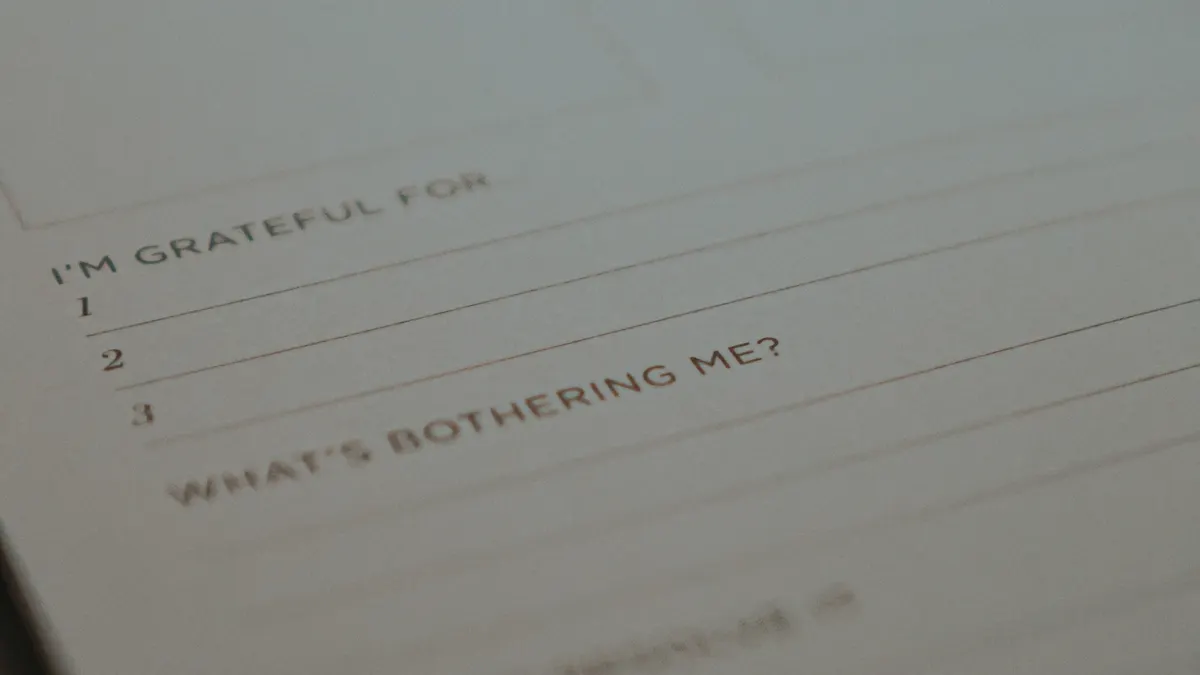
The most useful structure is a 10-minute sequence: 2 minutes to describe the event, 3 minutes to write the feeling in bodily language, 3 minutes to explore the meaning, and 2 minutes to name the need or next step. That is enough for clarity without turning the exercise into rumination.
I recommend this order because it prevents two common mistakes; still, if you are dealing with intense stress or trauma, it is safest to adapt the sequence with guidance from a licensed mental health professional and the APA’s stress resources. The first is intellectualizing too early. If you start with “Why am I like this?” you usually write a theory before you write the evidence. The second is staying at the level of mood. “I feel anxious” is not useless, but it is unfinished. Anxiety about what? In response to whom? Around what outcome? At what moment did it change from quiet to loud?
A good page often looks plain. It may include one blunt sentence, one body cue, one old belief, and one direct need. For example: “I felt left out when the plans changed without me. My throat got tight. I told myself I do not matter here. What I need is to ask for notice next time.” That is emotionally clean. It does not try to be profound. It is specific enough to act on.
This is also where many generic articles miss the point: clarity is not the same as catharsis. You can write pages and still know nothing more than when you started. If your entry ends in a swirl of explanations, go back and ask for the one concrete moment that changed the feeling. If there is no concrete moment, the feeling may be cumulative, and that is useful information too.
For a practical standard, I would treat one page and 10 minutes as enough; if you need much longer, it can help to consult a professional or therapist and use a tighter prompt next time. If you need 45 minutes to answer a prompt, the prompt is probably too large or too vague.
The honest limits of deep journaling
Deep prompts are not the right tool when you need immediate relief, a decision under pressure, or help with trauma that sends you into panic, numbness, or shutdown. They are also poor tools if you use them to prosecute yourself. A notebook can become a courtroom fast.
The biggest drawback is rumination. Some people write the same accusation against themselves in slightly different language and call it insight. It is not insight if nothing changes except the wording. If you keep landing on the same theme—abandonment, failure, unworthiness, anger—treat that pattern as data, not as a verdict, and consider speaking with a licensed mental health professional or checking the NIMH guidance on coping with difficult emotions.
Another limit is timing. Writing when you are highly activated can be useful, but only if you stay brief and grounded. A 5-minute prompt that ends with a need is better than a 25-minute spiral that ends with “I still do not know.” If the page makes you more flooded instead of clearer, stop and shift to sensory grounding, a walk, or a conversation with a trusted person.
This is also not the place for overgeneral rules like “always trust your feelings.” Feelings are real signals, but they are not always accurate interpreters. A feeling can point to hunger, grief, danger, shame, or an old pattern. The value of the prompt is that it helps you sort signal from noise.
When a prompt points to a bigger problem
A prompt is pointing to a bigger problem when the same answer keeps appearing across different situations. If every entry ends with “I do not feel safe,” “I am not being heard,” or “I cannot rest,” the issue is likely structural, not situational.
That may mean a relationship needs a boundary, a workplace needs a direct conversation, or your schedule is too packed to let your nervous system settle. It may also mean the emotion belongs to an older story that needs care beyond the notebook. In those cases, journaling is still useful, but only as a map. It shows where the pain clusters. It does not resolve the source by itself.
I would pay attention to three repeat signals:
- The same trigger appears with different people.
- The same body sensation shows up before every shutdown or conflict.
- The same sentence appears in your entries week after week.
Those repetitions are a flag. They tell you the problem is not one bad afternoon. They also tell you where outside support may help, whether that is therapy, a medical check if stress is affecting sleep or appetite, or a hard boundary with a person who keeps crossing the line.
Choose the right prompt for the job
Choose a naming prompt if you feel vague and flooded. Choose a trigger prompt if you know you are upset but do not know why. Choose a meaning prompt if your mind is spinning around a story. Choose a need prompt if the emotion is clear but the next step is not.
Do not use deep prompts if you want a mood diary, a productivity tracker, or a quick calm-down exercise. Those are different tools. Also skip them if you are too activated to write without spiraling; start with breath, movement, water, or contact with another person first.
The best use of deep journal prompts is not emotional elegance. It is emotional accuracy. Accuracy changes what you do next.
Key Takeaways
- The strongest prompts narrow the problem instead of asking you to explain your whole life.
- Start with what happened, then notice the body, then question the story.
- Use one prompt per entry to avoid turning reflection into repetition.
- If the same answer keeps appearing, the issue may be a boundary, a pattern, or a larger support need.
- If writing makes you more flooded, pause and get help instead of forcing clarity.
Frequently asked questions
How often should I use deep journal prompts?
Use them when something feels unclear, not on autopilot every day. A few focused entries a week is often enough if the goal is clarity rather than habit.
What if I do not know what I feel?
Start with body cues and context. Write what happened, then describe sensations like tight, heavy, hot, shaky, or numb. The name of the feeling often appears after the details.
Can journaling make emotions worse?
Yes, if you keep circling the same pain without landing on a need or next step. If the page leaves you more activated for longer than about 10 to 15 minutes, stop and switch to grounding or support.
Should I write by hand or type?
Either can work. Handwriting may slow the pace enough to reduce spiraling, while typing can be easier if your thoughts move quickly. Choose the format you will actually use.
What if the same issue keeps coming up?
Treat that repetition as a signal, not a failure. It often means the real problem is a boundary, a stuck belief, or a support need that cannot be solved by insight alone.
For more on emotional health and when to seek support, I would point readers to the National Institute of Mental Health and the American Psychological Association, which both publish plain-language guidance on stress, emotion, and coping.
Drafted with AI; not yet reviewed by a person.