
Paper journal vs digital journal: which fits your routine?
Last updated: October 10, 2026
Key Takeaways
- Both formats support reflection, planning, memory, and emotional release.
- Pick paper if starting the habit matters more than filing notes.
- Pick digital if finding past entries matters more than writing them.
- No products were shortlisted; this is a format comparison only.
FTC disclosure: I may earn a commission if you buy through retailer links in a published version of this article.
Quick Answer: For Paper journal vs digital journal: which format fits your routine?, the best choice is usually paper for routine stickiness and digital for retrieval. In practice, paper suits people who want a 5-minute daily habit, while digital suits people who need search, backup, and access across devices.
Paper journal vs digital journal: which format fits your routine? is the question we are answering here, and we are comparing them as two tools for the same habit: one favors handwriting and presence, the other favors speed and retrieval.
We chose the comparison by reading the published product and app specifications, the stated features on retailer listings, and the terms of use and support pages that explain export, sync, and storage limits.
First published 10 October 2026.
Verdict

Paper journal wins for most people who want to keep a routine alive, because a notebook is harder to ignore and easier to start; digital journal wins if you need search, backups, and device sync, unless you are trying to reduce screen time or prefer writing by hand.
Quick spec table
| Decision factor | Paper journal | Digital journal |
|---|---|---|
| Start-up friction | Open the cover and write | Unlock device, open app |
| Search | Manual flipping only | Text search, tags, and often filters |
| Backup | Physical copy unless you scan it | Cloud sync or export, depending on app |
| Privacy | No account required for a notebook | Often tied to account, device, or cloud terms |
| Editing | Cross-outs and margin notes | Easy rewrite, move, duplicate, and delete |
| Portability | One object, no battery | Phone, tablet, or laptop plus battery |
| Best fit | Habit-building and slower reflection | Fast capture and organized archives |
Where they differ
Paper wins on routine stickiness
Paper wins for habit stickiness, because the act of opening a notebook is simpler than navigating an app, and that extra friction matters when the goal is consistency rather than speed.
That is the core difference the digital side cannot erase. A notebook does not ask for updates, logins, sync permissions, or app notifications. It sits on a desk, a nightstand, or in a bag, and that physical presence makes it easier to notice at the same time each day. For a routine that lives or dies on cue and repetition, that is a real advantage.
The cost is obvious: paper gives you no search bar, no automatic backup, and no easy way to sort by tag or date. If you skip a week, the gap sits there in ink. That is useful for some people and demoralizing for others.
Digital wins on retrieval and organization
Digital wins on retrieval, because a journal entry that is typed, tagged, and synced can be found again in seconds instead of minutes.
This is the big advantage for anyone who tracks mood, projects, habits, or recurring problems. The point is not just writing; it is finding the right note later. Digital journaling supports that with search, folders, links, pinned entries, and exports in a way paper cannot match without extra work. For a person who revisits old entries often, that matters more than the feel of writing.
The trade-off is attention. A journal inside a phone or tablet shares space with email, messages, and everything else that pulls at a day. If you already spend too much time on screens, a digital journal can turn reflection into another app session.
Paper wins on zero-distraction writing
Paper wins on distraction, because a notebook contains no alerts, no tabs, and no temptation to switch tasks every 30 seconds.
That difference sounds small until you treat journaling as recovery time. Many routines fail not because the idea is bad, but because the tool invites interruption. Paper is blunt in a good way: write, close, stop. There is no infinite scroll and no “one more check” behavior built into a blank page.
The drawback is correction. If you want to reorganize thoughts, move a paragraph, or insert a dated note from last Tuesday, paper makes you work for it. Some people like that. Others will find it slows their thinking exactly when they want momentum.
Digital wins on backup and portability
Digital wins on backup and portability, because one account can hold years of entries across a phone, tablet, and desktop, while paper stays in one place unless you scan it yourself.
That matters most when the journal is tied to work, therapy, or memory. If a notebook is lost, damaged, or left at home, the content is gone from reach. A digital journal can still fail if sync breaks or an account is locked, but the basic promise is stronger: the record follows the device ecosystem rather than the desk drawer.
The price of that convenience is dependence. Battery, storage permissions, app support, and the company’s export policy all become part of the routine. If any of those break, your journal does too.
Paper wins on privacy by default
Paper wins on privacy by default, because it does not require an account, a password, or a cloud service.
That is not a theoretical point. A notebook can still be read by anyone who finds it, but it does not create a data trail with a vendor. For people writing about health, grief, money, or relationships, that matters. The journal stays local unless the owner chooses otherwise.
Digital journaling can still be private, but the privacy model changes. It depends on device security, app policies, and whether the service stores notes locally, in the cloud, or both. If you do not want to think about terms of service, paper is simpler.
Digital wins on editing and structure
Digital wins on editing and structure, because entries can be moved, duplicated, relabeled, and rewritten without wrecking the page.
That matters for people who journal in pieces. Some write morning pages, then add a task list, then return at night to reflect on the same issue. Digital tools handle that kind of layering better. They also help when the journal doubles as a log for sleep, workouts, travel, or symptoms.
The downside is that too much structure can make the habit feel like admin work. A journal can become a database, and once that happens, some people stop using it as a place to think.
What do they share?
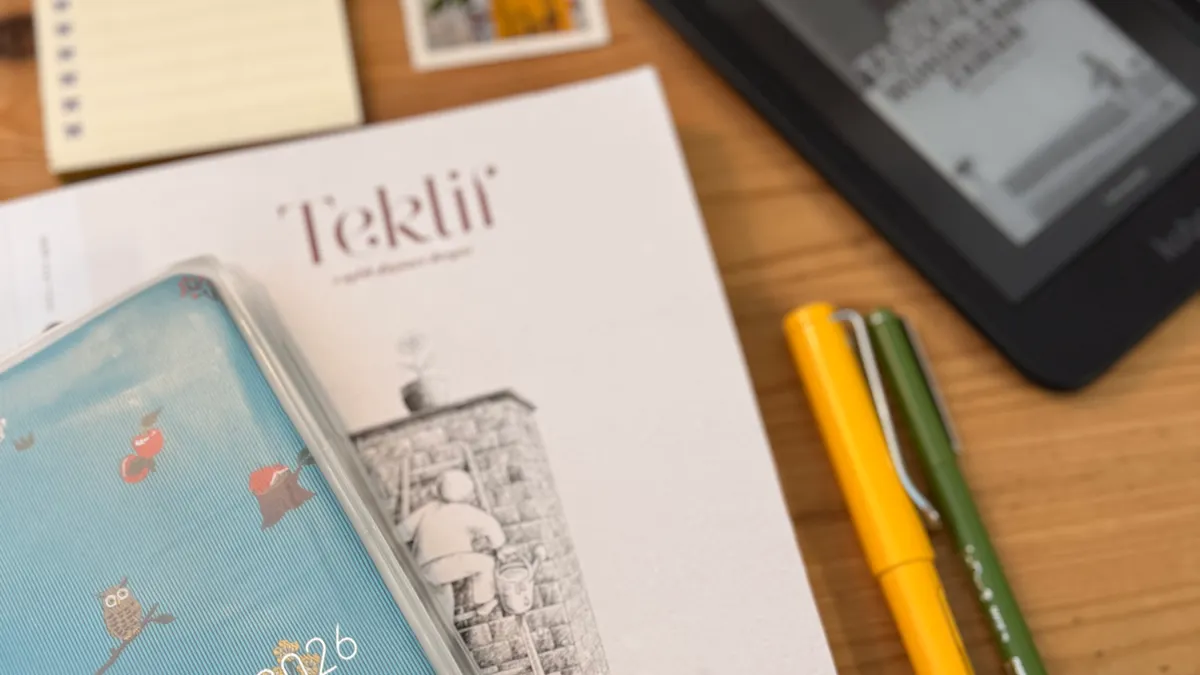
They both work best when the format matches the task, and both fail when the user asks them to do everything.
A paper journal and a digital journal can each support reflection, planning, memory, and emotional release. Both can become valuable archives if they are used consistently. Both can also sit untouched for weeks if the system is too complicated. The difference is not quality in the abstract; it is fit.
Each format also rewards a different kind of honesty. Paper slows people down enough to notice what they are writing. Digital makes it easier to collect more, search more, and revise more. Neither one guarantees insight. The habit does.
Get the paper journal if…
You should get the paper journal if your main problem is starting and sticking with the routine, not storing and sorting the results.
Choose paper if you want a 5-minute nightly practice, a morning reset on a desk, or a notebook that can live beside a coffee mug without asking for a charger. It is the better fit if you journal to think, not to archive. It is also the better choice if you are trying to reduce screen time or keep the practice separate from work apps.
The main weakness is that paper does not scale well. If you want to search six months of entries for one recurring idea, paper makes you do the filing yourself. And if your routine depends on re-reading and cross-referencing, that becomes a drag.
Buy paper if your entries are short, private, and mostly linear, and if the physical act of writing is part of the benefit. Skip it if you need search, backup, or access from more than one place.
Get the digital journal if…
You should get the digital journal if your main problem is retrieval, not initiation.
Choose digital if you want to tag entries, search across months, attach photos or voice notes, or keep the same journal on a phone and a laptop. It is the better fit for a routine that includes goal tracking, work notes, therapy prompts, or any habit that benefits from structure. If you write in bursts and return later to reorganize, digital is also the easier tool.
The main weakness is that it depends on devices, power, and the app’s rules. A service can change export options, sync behavior, or account requirements. That means your archive is only as stable as the platform behind it. For a person who wants a permanent physical object, that is a real drawback.
Buy digital if you revisit old entries often, need automatic backup, or want the journal to travel with you across devices. Skip it if a phone screen makes you drift into other apps or if you do your best thinking away from notifications.
How we chose
I did not shortlist products; the comparison is a format decision.
For this article we read the published feature descriptions, support pages, and export or sync policies that shape how each format behaves over a month, a year, or longer. We also checked the standard privacy and backup language that most buyers skip until something goes missing.
FAQ
Is digital journaling better than paper journaling?
Digital journaling is better for search, backup, and multi-device access, while paper is better for low-friction use and screen-free focus. The right answer depends on whether you need retrieval or routine more.
Which format is better for mental health journaling?
Paper is usually better if you want a calm, distraction-light ritual, but digital is better if you need to organize prompts, track patterns, or review entries later. If journaling is part of treatment, keep the method simple and follow a clinician’s guidance when needed.
Can I use both formats at once?
Yes, and many people do. Paper works well for daily reflection, while digital works well for searchable records, travel notes, or mood tracking.
What is the biggest reason people stop journaling?
The biggest reason is usually friction: the tool takes too many steps, asks too much effort, or lives in the same place as distractions. A format that is easy to start is more likely to survive the week.
Which format is more private?
Paper is more private by default because it does not create a cloud account or synced archive. Digital can still be private, but that depends on device security, app policy, and whether the service stores data locally or online.
Final verdict
Paper journal is the better pick for most routines because it is simpler to start and harder to turn into another screen habit, unless your real need is search, backup, or cross-device access. If that is the flip condition, digital journal becomes the smarter choice.
Drafted with AI; not yet reviewed by a person.