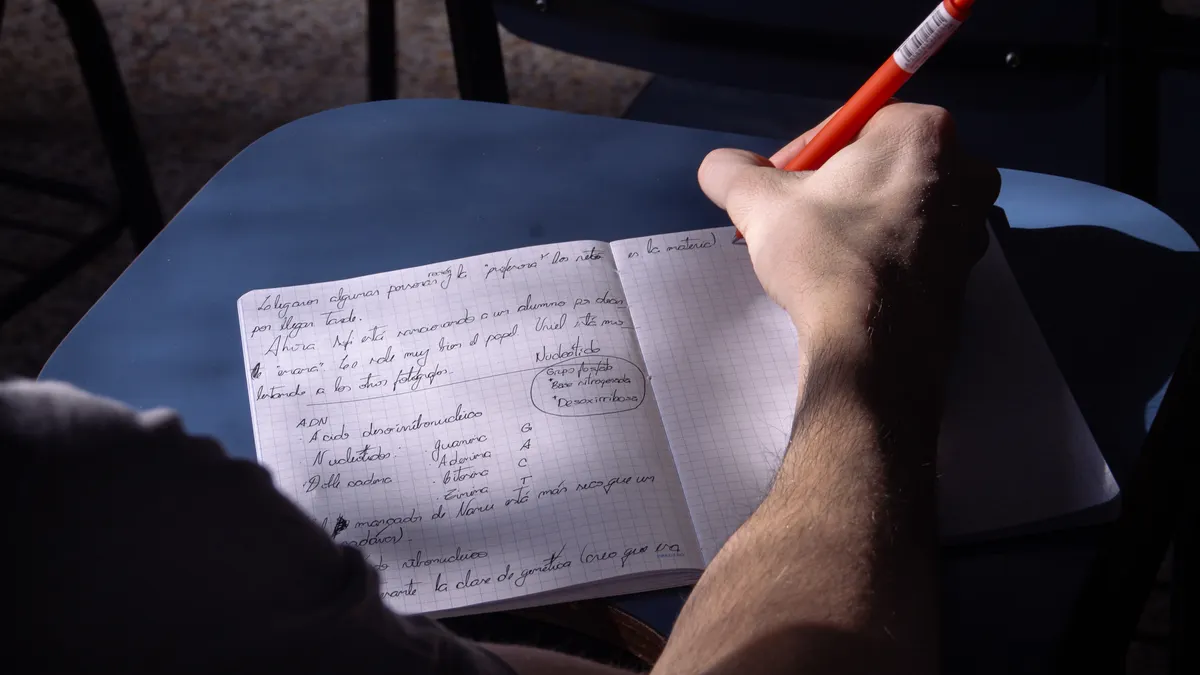
Daily Journaling Fundamentals: The Complete Guide
Last updated: October 10, 2026
Key Takeaways
- Daily journaling is a simple record-and-reflection habit, not a writing showcase.
- Write a little each day, and protect consistency over ambition.
- Put events, feelings, decisions, or observations on the page.
- Evening reflection suits many people, while morning pages help clear mental clutter for some.
Daily journaling fundamentals: The Complete Guide is a simple system, not a personality test. Quick answer: most people do best with 5 minutes a day, one prompt, and one fixed stopping point. The question most readers need answered is simple: how do I make a daily journal stick without turning it into homework? My answer is that the right system is short, repeatable, and tied to a real reason for writing.
I write from the standpoint of a long-time editor and writing guide: I know the difference between a prompt that sounds inspiring and a practice that survives a Tuesday night. The fundamentals of daily journaling are not glamorous. They are format, timing, prompts, and a rule for when to stop. Get those four right, and the habit has a chance.
What daily journaling is for, and what it is not

Daily journaling is a record-and-reflection practice, not a private literature project. It works when the page helps you notice patterns, unload noise, or make one clearer decision before bed. It fails when you ask it to become therapy, a memoir, and a productivity system at the same time.
The simplest useful definition is this: write once a day for a few minutes about what is happening, what you are feeling, or what you want to do next. That can mean three bullets, a paragraph, or half a page. The National Institute of Mental Health says writing about thoughts and feelings can help some people organize stress; I would treat that as a support tool, not a cure-all. If the goal is mental health treatment, consult a licensed clinician rather than relying on a blank notebook, and see the NIMH’s coping-with-stress guidance: https://www.nimh.nih.gov/health/topics/caring-for-your-mental-health
The mistake many people make is chasing depth on day one. A page that asks “What am I avoiding?” every night sounds serious, but it often creates avoidance of a different kind. The better question is, “What can I actually repeat for 5 minutes tomorrow?” That usually means a few concrete lines:
- what happened today
- what felt heavy or energizing
- what needs attention tomorrow
This approach is not for people who want polished prose, long emotional excavation, or strict archiving. It is for people who need a low-friction way to think on paper. If you want a record you will consult later, date every entry. If you want privacy, consult a professional when you are writing about legal or therapeutic concerns, and choose a secure notebook or a password-protected app only after reviewing how it stores and protects data. If you want neither, daily writing may simply not be the right tool.
A useful benchmark is time: if your entry usually takes more than 10 minutes, the system is already too ambitious for most days. Keep the cost of entry low. The habit should feel like washing a cup, not building a shelf.
How much should you write each day?
You should write less than you think and more consistently than you feel like. For most people, 3 to 10 minutes is enough to create a real habit, and a single page is plenty. The exact amount matters less than the repeatability of the slot.
A generic article gets this wrong by making daily writing sound like a moral test. It is not. If you skip a day, the system did not fail; the system was asking too much. A sustainable daily practice has three parts:
- a trigger
- a limit
- a fallback version
The trigger is the event that starts the session: after coffee, before the commute, after brushing your teeth, or when the phone goes on the charger. The limit is the rule that ends the session: one page, five minutes, or three bullets. The fallback version is what you do on bad days: one sentence only.
That fallback matters. On a day with a migraine, a late shift, or a full inbox, “write three lines” is realistic. “Reflect deeply for 20 minutes” is how people abandon notebooks. If you need a concrete target, I would choose:
- 5 minutes on ordinary days
- 1 sentence on overloaded days
- 10 minutes only when you have something specific to process
The other hidden variable is energy, not discipline. Morning writing tends to surface intention and plans. Evening writing tends to process the day. Midday writing catches reactions while they are fresh. There is no universal best time, but there is a best time for your actual routine. If your mornings are chaotic, do not build the habit there just because advice columns love dawn.
This section’s blunt truth is that the habit lives or dies on friction. A leather notebook, a fountain pen, and a perfect desk can become an excuse machine. A cheap notebook and a pen that works are enough. If the setup takes 90 seconds to start, you are in good shape.
What should go on the page?

You should put one of four things on the page: events, emotions, decisions, or observations. That is the core of it. Anything else is optional.
A daily entry does not need to be “meaningful” in some grand sense. It only needs to help you see what is true enough for today. I would recommend this simple structure because it covers most real use cases without overcomplicating the habit:
- What happened today?
- What am I feeling about it?
- What needs my attention next?
- What one line would I want to remember later?
That structure is useful because it mixes record and reflection. The event line keeps the page grounded. The feeling line keeps it human. The next-step line turns emotion into action. The memory line creates a usable archive.
Here is the part many guides leave out: you do not need all four every day. On a bad day, use just one.
- If you are overwhelmed, write what is loudest.
- If you are stuck, write what decision is pending.
- If you are numb, write what happened without interpreting it.
- If you are excited, write what you want to preserve from the feeling.
A lot of people fail because they treat the page like an exam. They wait until they have a worthy insight. That delay is the habit killer. The page is allowed to be ordinary. In fact, ordinary is where the value lives. A line like “trouble sleeping after the 8 p.m. email from my manager” can be more useful than a page of polished insight because it points to a pattern.
If you want more structure, use prompts rather than blank-page pressure. Good prompts ask for specifics:
- What took the most energy today?
- What did I avoid?
- What did I do well that I may forget?
- What am I pretending not to know?
Those questions work because they are narrow. A broad prompt like “How was your day?” often produces mush. Narrow prompts produce facts, and facts are easier to revisit. For anyone building a memory aid, this is the main reason daily entries matter: they become a dated trail of attention.
Morning pages, evening reflection, and the version that actually sticks
Evening reflection wins for most people because it matches the natural shape of a day, but morning pages win for people who need to clear mental clutter before work. The right choice depends on what problem you are trying to solve.
Morning writing tends to be lighter and more strategic. It is good for intention, planning, and surfacing worries before they hijack the day. Evening writing is better for review, emotional processing, and noticing patterns with hindsight. Both can work. Both can also become chores if they are too long.
A useful comparison looks like this:
| Criteria | Morning pages | Evening reflection | Winner for condition |
|---|---|---|---|
| Main use | Planning and clearing mental noise | Processing and reviewing the day | Evening for pattern-finding |
| Best duration | 5-15 minutes | 5-10 minutes | Morning for deeper free-write |
| Risk | It can delay the start of the day | It can feel like homework when tired | Morning for busy evenings |
| Memory quality | Fresh intentions, less context | Better recall of events and reactions | Evening for honest review |
| Emotional tone | Often proactive | Often more candid | Evening for self-understanding |
| Ideal trigger | After waking or coffee | After dinner or before bed | Morning for structured starts |
| Consistency challenge | Mornings get crowded fast | Fatigue lowers follow-through | Depends on your schedule |
| Best for | Decision-making and anxiety | Habit tracking and pattern spotting | Evening for most people |
| Weak spot | Easy to become planning only | Easy to become rumination | Neither if you need a break from thought |
Morning pages are not automatically superior because they sound productive. They are useful when your mind is loud before the day begins. If you wake up with unfinished thoughts, a 5-minute page can keep you from carrying them into every meeting. The downside is obvious: many mornings are rushed, and a practice that competes with getting dressed will lose.
Evening reflection usually has better staying power because the day already ended. There is less pressure to be useful in the moment. The drawback is that tired people write sloppy entries or skip them entirely. Evening work also carries one honest risk: if you are already distressed, a long review can slide into rumination. For that reason, I would keep it bounded. Do not let “thinking about the day” become 40 minutes of self-interrogation.
My recommendation is straightforward: choose evening reflection if your goal is insight, choose morning pages if your goal is mental clearing, and choose one slot only. Splitting between morning and night sounds thorough; in practice, it often creates a habit with two weak anchors instead of one strong one.
Which daily journaling format should you choose?
You should choose the format that makes the first 30 seconds easy. The most effective daily journaling format is the one you will not resent opening.
A blank notebook is the most flexible option. It is also the easiest to overthink. If you stare at empty lines and freeze, the blank page is costing you motivation. A guided journal, with prompts printed on each page or section, removes that blank-page friction. The trade-off is obvious: it can feel repetitive or cramped if you want more freedom.
Digital journaling has a different set of strengths. It is searchable, easy to back up, and convenient if you already write on a phone or tablet. It also makes past entries easier to find by date or keyword. The downside is interruption. Notifications, autocorrect, and app switching can break the state you were trying to preserve. If your phone is a distraction source, a digital journal may be the wrong tool even if it is technically convenient.
Here is the practical split I would make:
- Choose a paper notebook if you want fewer distractions and more tactile routine.
- Choose a guided journal if you freeze in front of blank pages.
- Choose a notes app or journaling app if search, backup, and portability matter most.
There is also a hybrid that works well: paper for the writing ritual, digital for the archive. That is useful when you like handwriting but want a backup copy later. The obvious drawback is duplication. If you are already struggling to keep up, do not create a second job for yourself.
One detail generic advice usually misses is privacy. Paper is visible. Phones are lockable, but not all apps are encrypted or worth trusting with sensitive material. If privacy matters, read the app’s security claims carefully and prefer tools that clearly explain local storage, passcodes, and backup behavior. If you are writing about trauma, conflict, or anything that could put you at risk if exposed, the safest format may be the one with the simplest control over access. For legal or therapeutic concerns, consult a professional.
The right choice is rarely the fanciest one. It is the one that lowers resistance at 7:30 p.m. on an ordinary day.
How to make the habit last longer than a week
You make the habit last by separating the act of writing from the quality of the writing. That is the main trick.
If you wait to feel inspired, the habit will depend on mood. If you wait to produce a useful insight, you will quit on the days you most need it. The better system is embarrassingly small:
- same time or same trigger
- same notebook or app
- same stop point
- no judgment on entry quality
This is where many readers need a hard truth: consistency beats intensity by a wide margin. A short entry for 60 days will teach you more about your mind than a single “perfect” weekend retreat. The archive only becomes useful if there are enough dated entries to compare. Ten pages over two months is a start; fifty pages begins to show patterns.
There are three practical ways to keep going:
- Tie it to an existing habit.
- Reduce the minimum.
- Use a repeating prompt set.
I would also recommend one non-obvious rule: do not reread too often in the first month. Early rereading can make you self-conscious. It can also turn the habit into editing, which is slower and less inviting. Save review for the end of a week or month. Then look for repeat complaints, repeated wins, and decisions that keep appearing. That is where the journal earns its keep.
The big risk here is perfectionism disguised as standards. A tidy page is satisfying; a missing page is reality. If the system punishes ordinary life, it will not survive ordinary life. Build for imperfect days, not ideal ones.
Exception scenarios: when the usual advice flips
You should break the standard advice in a few specific situations. If one of these fits you, the usual “write every day” rule may need adjustment.
First, if daily writing triggers anxiety, sleep disruption, or obsessive checking, shorten the practice or pause it. A 2-minute bullet list may be safer than a long reflective session. If the page is making symptoms worse, a clinician’s advice matters more than a habit plan.
Second, if you are using the journal mainly for work decisions, a daily dump can be too much. In that case, a weekday log or an end-of-week review may serve you better. Some people do better with 3 entries a week than with a forced seven.
Third, if you are highly privacy-sensitive, paper may be the wrong format unless you have a secure place to store it. A locked device with a passcode and backup control may be more appropriate. The trade-off is that digital tools can invite distraction, so the setting matters.
Fourth, if you are recovering from burnout, “daily” may need to mean “brief and forgiving,” not “strict.” In that season, the goal is continuity, not output. A single line that marks the day can be enough.
These exceptions matter because advice that ignores context becomes brittle. The point is not to obey a ritual. The point is to create a record that is honest, usable, and easy enough to repeat.
The verdict: the simplest daily journaling system to start with
Choose a plain notebook if you want fewer distractions and are comfortable handwriting. Choose a guided journal if blank pages make you stall. Choose a digital app if search and backup matter more than ritual. Choose a 5-minute evening entry if you want the highest chance of sticking with it.
If I had to make the call in one sentence: start with one daily prompt, one time of day, and one hard stop after 5 minutes. That combination gives you the best mix of honesty and sustainability.
What to write in your first 7 entries
You should keep the first week simple and repeatable. The goal is not insight on demand; it is learning what kind of prompt you will actually answer. Use the same structure for 7 days so you can see what sticks.
Try this sequence:
- Day 1: What happened today?
- Day 2: What took the most energy today?
- Day 3: What am I avoiding?
- Day 4: What did I do well?
- Day 5: What is still unresolved?
- Day 6: What do I want tomorrow to feel like?
- Day 7: What pattern do I notice?
That sequence works because it shifts from description to reflection without asking for a dramatic breakthrough. Day 1 grounds you in events. Day 3 surfaces resistance. Day 7 asks for pattern recognition. If you need less, cut each prompt to a single sentence. If you need more structure, answer them in the same order every night for another week.
A common problem in week one is overexplaining. You do not need a full backstory for every feeling. Short entries are not a sign of failure. They are a sign that you are building a habit that might survive outside a burst of enthusiasm.
One more practical point: date the entry. If you revisit the notebook later, dates turn scraps into sequence. Without them, you have loose pages. With them, you have a timeline. For anyone who wants their writing to be usable later, that detail matters more than fancy prompts.
Common mistakes that make people quit
The biggest mistake is making the practice too large on day one. A 20-minute session sounds reasonable until your schedule changes. Then it becomes a skipped day, then three, then a dead notebook.
A second mistake is trying to write beautifully. This is not a place to polish sentences. It is a place to collect truth quickly enough that your future self can use it.
A third mistake is using the journal only on bad days. That creates an inaccurate record and teaches your mind that the page exists for crises only. Better to write on ordinary days too, even if all you record is a few routine facts.
A fourth mistake is treating every entry as permanent and profound. Some lines are just weather reports. That is fine. A journal that captures ordinary weather is often more useful than one that only records storms.
If I had to boil the whole practice down to one rule, it would be this: make the first sentence easy enough to write when you are tired. Once that sentence exists, the rest becomes possible.
FAQ
How long should a daily journal entry be?
Five minutes to one page is enough for most people. If you regularly need much longer, the format is probably too open-ended.
Is it better to journal in the morning or at night?
Night is better for review and pattern spotting. Morning is better for clearing your head and setting intent. Pick the time you can repeat most days.
Do I need prompts?
Not strictly, but prompts help a lot at the start. A single repeating prompt can prevent the blank-page stall that kills the habit.
Should I use paper or an app?
Use paper if you want fewer distractions. Use an app if search, backup, and portability matter more. Privacy and device habits should decide this, not novelty.
What if I miss a day?
Write the next day and keep going. Missing once is normal; turning one miss into a quit is the real problem.
Sources and further reading
For readers who want a grounded starting point on writing and mental health, I would begin with:
- National Institute of Mental Health: information on coping with stress and mental health basics, at https://www.nimh.nih.gov/
- American Psychological Association: articles on expressive writing and emotional processing, at https://www.apa.org/
- Mindful or a similar reputable mindfulness organization for reflection and attention practices, if you want a lighter entry point into routine self-observation
- University of Rochester Medical Center on expressive writing: https://www.urmc.rochester.edu/encyclopedia/content.aspx?ContentTypeID=1&ContentID=4552
Those sources are not a substitute for clinical care, but they do help separate useful writing habits from wishful thinking.
Final take
Daily journaling is not about producing a beautiful archive. It is about building a small, durable habit that helps you notice what is happening before it hardens into noise. Keep it short. Keep it specific. Keep it honest. That is enough to start, and often enough to continue.
Drafted with AI; not yet reviewed by a person.