
Journal Prompts for Gratitude That Actually Work
Last updated: October 10, 2026
Key Takeaways
- Specific prompts work better than slogans.
- Pick prompts based on what you overlook most.
- On stuck days, choose something answerable in under 2 minutes.
- One prompt, three lines, and one detail is enough.
If gratitude journaling feels fake, stale, or forced, the fix is not “try harder.” It is using journal prompts for gratitude that make your brain notice concrete evidence, not bland positivity. This guide is for the person who opens a notebook and thinks, “I have nothing interesting to write.”
The topic is simple: journal prompts for gratitude work best when they are specific, time-bound, and tied to real situations in your day. That matters because vague prompts like “What am I thankful for?” tend to produce the same three answers until the page starts to feel dead. More pointed prompts give you something to observe, compare, and remember.
I write about reflective writing and self-guided habit design, so I care less about pretty wording and more about prompts that people will actually keep using. For background on journaling and expressive writing, see the APA’s overview of writing and mental health and the University of Rochester Medical Center’s summary of expressive writing benefits.
What makes a gratitude prompt worth writing down?

A good gratitude prompt gives you a detail, not a slogan. The stronger ones ask for a person, moment, object, or problem that changed the shape of your day. That is the difference between a page that feels sincere and a page that sounds like a poster.
The simplest test is this: if a prompt can be answered with “my family, my health, my job,” it is too broad. If it pushes you toward “the neighbor who carried my package inside during the rain” or “the 8:15 train that was late just long enough for me to catch it,” it is doing its job. Specificity creates memory, and memory makes gratitude feel real instead of decorative.
I would choose prompts that include a constraint: “today,” “this week,” “before noon,” “when I was stressed,” or “something I usually ignore.” Constraints stop the mind from recycling the same answers. They also make the exercise shorter, which matters if you only have 5 minutes.
The downside is that specific prompts can feel awkward at first. A person used to broad journaling may think they are “not deep enough.” That objection misses the point. Gratitude is not supposed to read like a philosophy essay. It is supposed to train attention. If a prompt makes you notice the electric kettle you use every morning, the 10-minute walk between meetings, or the friend who replies with a meme when you are spiraling, it is working.
Good prompts also avoid emotional pressure. Not every entry needs to be warm or dramatic. Sometimes the honest answer is small: a clean shirt, a silent room, a bus that arrived on time. Those are useful because they are repeatable, not because they are glamorous.
The most useful gratitude prompts by situation
The best prompt depends on what you keep missing. If you want a page that does real work, match the prompt to the kind of attention you lose most often.
- For rushed mornings: “What is one thing already going right before 9 a.m.?”
- For stressful days: “What stayed steady while everything else felt loud?”
- For lonely evenings: “Who made me feel seen today, even in a small way?”
- For comparison spirals: “What do I have that I once wanted badly?”
- For low-energy days: “What made today easier by 1 percent?”
- For sleep-time reflection: “What detail from today deserves a second look?”
These prompts work because they are not asking for a life inventory. They ask for a moment. A moment is easier to find, easier to trust, and easier to repeat tomorrow.
The strongest prompt types are often the ones that point to overlooked support. That might be a building with working heat, a library that stays open late, a classmate who shared notes, or a mug that fits your hand. If you only write about grand wins, you will miss half the material. A notebook full of huge emotional declarations is harder to sustain than one that notices ordinary help.
I would skip prompts that sound like moral homework: “Why am I blessed?” or “What should I be grateful for?” Those can make people freeze, especially if they are grieving, depressed, or just exhausted. The problem is not the idea of gratitude. The problem is the wording. A prompt that starts with “what helped” or “what softened this day” is gentler and usually more usable.
Here is the practical rule I use when choosing prompts: if it gives you one clear place to look, keep it; if it asks you to summarize your whole life, cut it.
Journal prompts for gratitude when you feel stuck
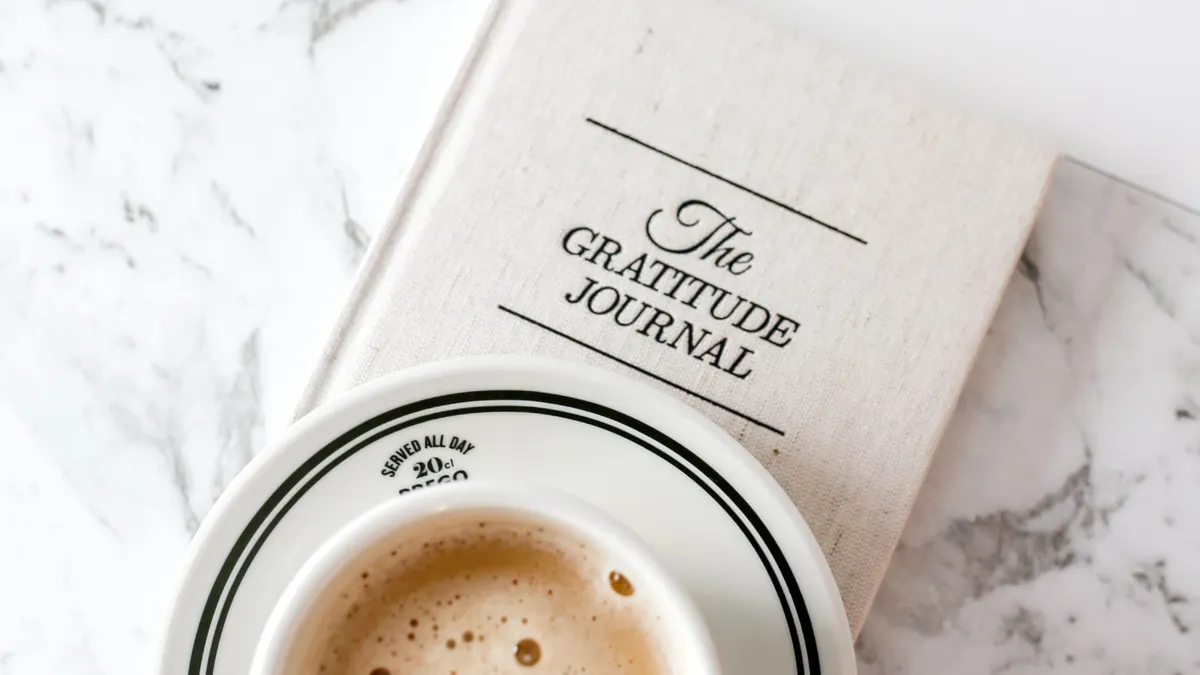
The right prompt for a stuck day is one that narrows the field to something you can answer in under 2 minutes. When someone feels blank, broad questions tend to provoke guilt: “I know I should be grateful, but I can’t think of anything.” Narrow prompts bypass that trap.
For example, use prompts like these:
- What is one inconvenience I did not have to solve today?
- What object made my day easier without asking for attention?
- Who did one small thing that saved me time?
- What problem turned out to be smaller than I feared?
- What part of my routine felt automatic in a good way?
- What did I receive today that I usually take for granted?
- What is one thing I have now that my past self would have wanted?
- What sound, smell, or texture helped me settle down?
Those prompts are useful because they do not require you to feel grateful on command. They require you to notice a fact. The feeling often follows later.
A real weakness of gratitude journaling is that it can become repetitive. If you always write about the same people, pet, coffee, or sunrise, the page loses force. That is why I recommend rotating categories: people, objects, moments, abilities, comforts, and small reliefs. Rotation keeps the practice honest. It also helps on days when your life feels narrow and irritating; a new category gives you a way in.
I do not recommend forcing gratitude during acute loss, fresh grief, or trauma recovery. In those cases, a prompt can feel like a demand to perform wellness. A person in that position may need more neutral writing first: “What happened today?” or “What do I need?” Gratitude can return later. It does not need to be dragged in by the collar.
How to turn a prompt into a page you’ll actually use
The easiest structure is one prompt, three lines, and one sentence of detail. That is enough. A page does not need to become a speech.
Try this format:
- Prompt: What made today easier?
- Answer: The 7:30 bus was on time.
- Detail: I got to the appointment with 12 minutes to spare, which kept me from starting the day in panic.
That second line matters because detail keeps the entry from turning generic. A sentence like “I’m grateful for public transit” sounds fine but leaves no trace in the mind. “The 7:30 bus was on time” is specific enough to remember later. That is the whole point.
If you want more structure, use a 5-day rotation:
- Day 1: people
- Day 2: places
- Day 3: objects
- Day 4: reliefs or conveniences
- Day 5: your own effort
That last category matters more than most people realize. Gratitude that only points outward can slide into passivity. Writing down your own follow-through — sending the email, making the appointment, putting the laundry away, taking the walk — helps you notice agency, not just gifts.
I would avoid turning every prompt into a list of 10 items. Long lists make some people feel productive, but they also blur together. Three good answers are better than 10 lazy ones. The reader who needs this article is usually not short on ideas; they are short on energy. A shorter format is more likely to survive a hard week.
The honest limitations of gratitude journaling
Gratitude prompts are useful, but they are not a cure for low mood, anxiety, burnout, or depression. They can support a steadier attention pattern, but they do not replace treatment, rest, or real change. If the underlying problem is sleep deprivation, unsafe work, financial pressure, or grief, a notebook will not fix the cause. If you are dealing with persistent depression, anxiety, or trauma symptoms, consider checking in with a licensed mental health professional or another qualified clinician. For general guidance, the National Institute of Mental Health and the NHS both note that self-help tools are not substitutes for professional care when symptoms are serious.
That is why I think gratitude journaling is best treated as a small practice, not a total worldview. A 3-minute entry can help someone end the day less tangled. It cannot carry the whole emotional load of a difficult life.
The other limitation is that the practice can become performative. A person may start writing what sounds good instead of what is true. That is a warning sign. If every entry reads like a quote card, the journal is serving self-image more than reflection.
Here is my blunt take: gratitude prompts are not for someone who wants instant cheer. They are for someone who wants a better signal-to-noise ratio in their own head. That makes them especially useful for teachers, caregivers, students, and anyone who ends the day mentally flooded. They are less useful for people who need freeform emotional processing, or who are using journaling mainly to work through anger.
If you want the practice to stay honest, include one prompt that is not purely positive once or twice a week: “What was hard today, and what helped me keep going?” That keeps gratitude from floating away from reality.
Exception scenarios: when I would change the approach
I would change the approach if the prompt is making the page feel fake. A gratitude practice should sharpen attention, not flatten it.
- If you are in fresh grief or active crisis, start with neutral prompts like “What happened today?” or “What do I need?” Gratitude can wait.
- If you keep repeating the same answers, switch to prompts with narrower categories or time limits, such as “before lunch” or “in my commute.”
- If gratitude makes you feel guilty, use prompts about support, relief, or effort rather than “blessings.” The wording may be the problem.
- If you want deeper emotional processing, gratitude alone is the wrong tool. Pair it with freer journal prompts, therapy, or guided reflection.
The core idea is simple: the method should match the state of the person using it. A 2-minute prompt is right for tired people. A more open journal is right for people who need room to think. Mixing those goals usually produces a notebook nobody wants to reopen.
Choose these prompts if you want a practice you can repeat
Choose specific, time-bound prompts if you want a gratitude habit you can keep on an ordinary Tuesday. Choose broad “what am I grateful for?” questions if you want a quick emotional check-in and do not mind vague answers. Neither fits well if you are in fresh grief, a mental health crisis, or a season where gratitude feels like a demand instead of a relief.
If you want the cleanest starting point, I would use these five:
- What made today easier?
- Who helped me without making a big deal of it?
- What small comfort did I almost ignore?
- What problem turned out better than expected?
- What did I do today that I want to remember?
They are simple, but they are not empty. Simplicity is the point.
A few prompts I keep coming back to
The strongest gratitude prompts are the ones you can answer honestly on a tired day and still feel are worth writing down. I would start with these:
- What is one thing already working in my life today?
- Who showed up for me in a quiet way?
- What object, habit, or place made the day easier?
- What did I receive that I usually overlook?
- What did my past self do that helped my present self?
These prompts are good because they force a close look at real life. They do not ask for perfection. They ask for evidence.
FAQ
How long should a gratitude journal entry be?
Three to five sentences is enough for most people. A single specific detail matters more than a long paragraph.
Should I write gratitude prompts every day?
Daily can work, but consistency matters more than frequency. Three times a week is better than daily writing you resent.
What if I cannot think of anything?
Shrink the question. Ask about one object, one person, one relief, or one thing that went slightly better than expected.
Are gratitude prompts the same as affirmations?
No. Gratitude prompts ask you to notice real details. Affirmations are usually statements you repeat to influence mood or mindset.
Can gratitude journaling feel fake?
Yes, especially if the prompts are too broad or too cheerful. Specific prompts usually feel more believable and less forced.
Drafted with AI; not yet reviewed by a person.