
Blank Page Prompts vs Structured Journaling
Last updated: October 10, 2026
Key Takeaways
- Structured journaling usually wins for consistency because it gives a first step when motivation is low.
- Blank page prompts are better when you need emotional space, free association, or open-ended reflection.
- Both work best in short sessions of about 2 to 5 minutes rather than long writing blocks.
- If you want a habit you can repeat, structure helps; if you want room to think, openness helps.
FTC disclosure: I may earn a commission if you buy through retailer links, at no extra cost to you.
In short: Structured journaling wins for most people who want a habit they can repeat on tired days; blank page prompts win for people who need space to think, vent, or explore without rules.
Blank page prompts vs structured journaling is the core question here, and we sorted it by reading the published evidence on journaling methods, prompt-based guides, and the practical trade-offs people report when structure helps or gets in the way.
First published 10 October 2026.
Verdict

Structured journaling wins for most readers because it lowers the blank-page problem while still giving enough freedom to adapt, unless you are using writing mainly for open-ended reflection or emotional spillover.
Blank page prompts vs structured journaling comes down to whether you need a prompt to start or space to continue. The real choice is not “which is better in general?” but “which one will still work when you are tired, distracted, or unsure what to write?”
Quick spec table
| Decision factor | Blank page prompts | Structured journaling |
|---|---|---|
| Starting friction | Low only if ideas come easily | Lower for most people because the page tells you what to do |
| Flexibility | High | Medium, depending on the template |
| Best use case | Free writing, emotional release, deep reflection | Habit-building, self-check-ins, goal review |
| Weak spot | Can stall on hard days | Can feel boxed in or repetitive |
| Best for | People who hate templates | People who need a repeatable routine |
How we chose
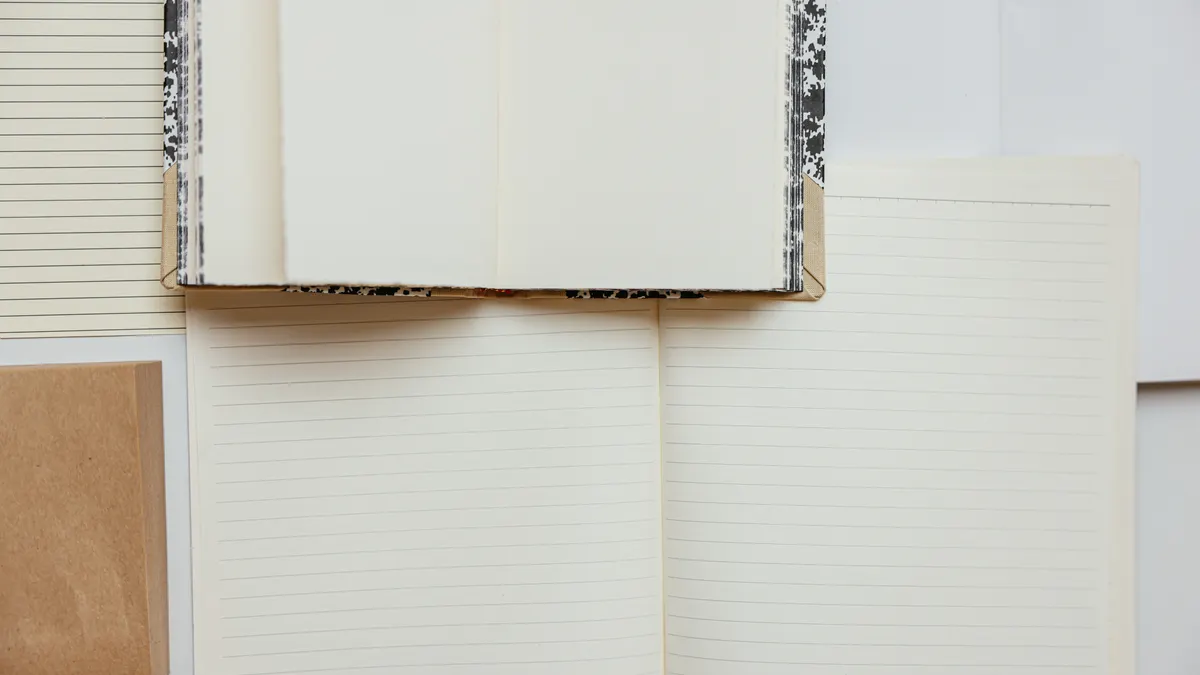
We compared methods, not products, because this is a format question rather than a gear roundup, and the useful evidence came from published self-help guidance, coaching templates, and well-known writing standards such as the American Psychological Association’s stress-writing recommendations and the general CBT practice of structured thought records.
Where they differ
Starting the page
Structured journaling wins this round because it gives you a first move, which matters most when the problem is not insight but inertia.
A blank page prompt can sound liberating, but the same openness becomes the bottleneck when your mind is tired. A structured page usually asks for one or more fixed fields — for example, “three things I noticed,” “one win,” or “one worry” — so you do not spend your energy inventing the format before you write.
That difference is not cosmetic. A blank page asks you to decide the task and do the task at the same time; a structured page separates those jobs. If you are trying to build a daily habit, that separation is the whole point.
The one catch is obvious: structure can feel like a script, and if the prompt is too narrow, you may start writing answers instead of thinking. That is why a rigid template is a poor fit for people who only write when they feel a strong internal push.
Depth of reflection
Blank page prompts win this round because they leave room for associations, contradictions, and messy thoughts that a template can flatten.
A blank page is better when the goal is not to “complete” anything but to see what appears after the first paragraph. It is the format we would choose for grief, ambivalence, or a problem that changes shape while you write. The open field gives you room to move from facts to feelings without having to justify every turn.
Structured journaling can still go deep, but its strength is precision, not drift. A thought record, gratitude grid, mood log, or decision worksheet focuses attention; it does not invite you to wander. That is useful if you want clarity, but less useful if you need to discover what you actually think.
The blank-page side is that depth is not guaranteed. If you freeze after two lines, openness can become a dead end. The page may be spacious, but it is still empty.
Habit formation
Structured journaling wins this round because it reduces decision fatigue and makes the practice easier to repeat across 5-minute sessions.
Habits usually fail at the beginning of the session, not the end. A fixed format solves that by turning “write in your journal” into “fill in these three boxes” or “answer these two questions.” That tiny reduction in choice often matters more than inspiration.
Blank page prompts ask for more from a person who has less to give. On a calm Sunday that may be fine. On a work night, after a commute or a hard conversation, the blank page can feel like a test you did not study for.
The trade-off is that structure can become mechanical. If every entry looks the same, you may keep the habit but lose engagement. That is still better than quitting, but it is not the same as fresh reflection.
Emotional release
Blank page prompts win this round because they allow uncensored writing, which is what many people need when the point is release, not organization.
When someone is overwhelmed, the most useful thing is often not a framework but permission. A blank page lets anger, fear, embarrassment, or relief show up without being sorted into boxes too early. That can make it easier to get the feeling out of the body and onto the page.
Structured journaling is weaker here because structure can interrupt the flow. If the page keeps asking for categories, the writer may start self-editing before the raw material has surfaced. That is exactly what you do not want when the goal is to unload.
The downside of blank-page release is that it can spiral. If you are prone to rumination, unstructured writing may keep you circling the same worry instead of settling it. In that case, structure is safer.
Clarity and problem-solving
Structured journaling wins this round because it turns a vague knot into smaller decisions, which is the point of most practical writing.
A structured page can separate facts, assumptions, options, and next steps. That matters because many “I need to think” problems are really “I need to sort.” A template that asks for a trigger, a feeling, a counter-thought, and one action can move a person from fog to plan in a single page.
Blank-page prompts can produce insight, but they are unreliable for decisions. They may uncover a feeling you had missed, yet stop short of a conclusion. That is fine for processing, not fine for choosing.
The flaw of structured problem-solving is that it can oversimplify. Some decisions are emotional, social, and practical at once. If the template is too neat, the answer may look clean before you have really examined it.
What they share
Both formats work best when the page is short enough to repeat and honest enough to matter, usually around a few minutes rather than a long writing session.
Both also rely on the same habit engine: attention, repetition, and a place to put thoughts outside your head. The difference is not whether journaling helps in principle; the difference is how much help you need from the page itself.
Both can fail if they become performance. If you start writing for the “right” answer, the exercise loses value fast. A page that is polished but fake is worse than a rough page that tells the truth.
Get blank page prompts if …
Blank page prompts are the better pick if you write to think, write to feel, or write only when the subject is emotionally charged and hard to box in.
Choose this format if you are working through grief, resentment, uncertainty, or a creative block where a template would feel like a fence. It is also the better choice if you already know how to begin and only need enough silence to keep going.
If that sounds familiar, the blank page can be the problem rather than the cure; if journaling anxiety, depression, or distress is getting worse, consult a mental health professional and see the American Psychological Association’s guidance on expressive writing. I would not hand this format to someone who stops after one line or who keeps staring at the page waiting for a better idea.
Get structured journaling if …
Structured journaling is the better pick if you want consistency, a quick start, or a record you can compare across days.
Choose this format if you are tracking mood, building a gratitude practice, reviewing goals, or trying to make sense of recurring patterns. It is especially good when the main obstacle is not emotion but follow-through. A template gives the brain less room to bargain.
Skip it if you feel boxed in by checklists, if your thoughts arrive in fragments, or if you use writing mainly for release rather than review. In those cases, structure can make the page feel smaller than your mind.
How do I know which one will stick?
Structured journaling is more likely to stick if your problem is starting; blank page prompts are more likely to stick if your problem is feeling constrained once you begin.
That is the simplest test we know. Ask which failure is more common for you: not opening the notebook, or opening it and immediately losing interest because the prompt feels too narrow. The first points toward structure. The second points toward openness.
A useful middle path is to start structured for 2 to 3 minutes and then leave one open line at the end. That preserves momentum without locking the whole page into a script.
Can I use both?
Yes, and that is often the best answer if you have different jobs for different days.
Use structured journaling for weekday maintenance: mood check-ins, plans, and short resets. Use blank-page prompts for weekends, rough patches, or any moment when you need to hear yourself think. The two formats are not enemies; they solve different problems.
The mistake is trying to make one format do both jobs all the time. A page that is good for release is not always good for review, and a page that is good for review is not always good for release.
FAQ
Is blank-page journaling the same as free writing?
Yes, in practice it usually is. The writer starts with little or no structure and lets the page unfold from whatever appears first.
Is structured journaling better for anxiety?
Often, yes, if the anxiety responds to order and routine. A fixed format can reduce uncertainty and help you separate facts from fears, though if writing makes you more tense, a gentler or shorter format is wiser.
What if I hate both?
Then we would shorten the task instead of abandoning it. One sentence, one list of three items, or one question answered honestly is enough to count.
Which one is better for beginners?
Structured journaling is usually better for beginners because it removes the hardest part: figuring out what to do on the page.
Final verdict
Structured journaling is the better default because it is easier to start, easier to repeat, and better for people who want a habit rather than a blank canvas.
The condition that flips it is simple: if your main need is emotional release, creative drift, or open-ended self-exploration, the blank page wins instead.
Drafted with AI; not yet reviewed by a person.