
Journal Prompts and Guided Writing: Complete Guide
Last updated: October 10, 2026
Quick Answer: For most readers, 3 to 5 journal prompts plus 1 guided writing format is enough to build a usable practice without overload.
If your pages keep starting strong and then drying up, journal prompts and guided writing are the fix. They turn a blank page into a specific task, which is exactly what most people need when they want clarity, consistency, or emotional release but do not know how to begin. In this guide, Journal prompts and guided writing — The Complete Guide explains how to use both tools in a practical way.
I write about personal development and writing practice, so I pay close attention to the difference between a prompt that opens thought and one that just collects clichés. That difference matters more than the number of prompts in a book, the prettiness of the notebook, or the length of the session.
What are journal prompts and guided writing?
Journal prompts and guided writing are structured ways to write when you do not want to invent the topic yourself. A prompt gives you a question, sentence stem, or theme. Guided writing adds more direction: a sequence, a time limit, a focus, or rules like “write in three parts” or “answer in single sentences.”
That distinction matters because people often treat all prompts as equal. They are not. “What made today hard?” is a prompt. “Write for 10 minutes about the moment today changed, then list one thing you needed and did not get” is guided writing. The second one is more constraining, but it usually produces more useful pages because it narrows the field.
This is not about making writing pretty. It is about making it usable. A good prompt often helps with one of four jobs:
- getting past blank-page paralysis
- spotting patterns in your thoughts
- naming feelings you have been circling
- turning vague problems into a next step
The best prompts do not ask for a diary entry about everything. They ask for one slice of life, one memory, one decision, or one feeling. That is why a prompt like “What matters right now?” often works better than “How are you feeling today?” The first gives shape. The second can sprawl.
Guided writing also includes formats such as morning pages, therapy-style reflection, gratitude lists, problem-solving pages, and letter writing. Those are not interchangeable. A gratitude page is poor for grief. A decision page is poor for free association. A reflection page is poor if you need a firm action plan.
If you want the short answer: use prompts when you need direction, and use guided writing when you need direction plus structure.
Why do prompts work when blank pages do not?
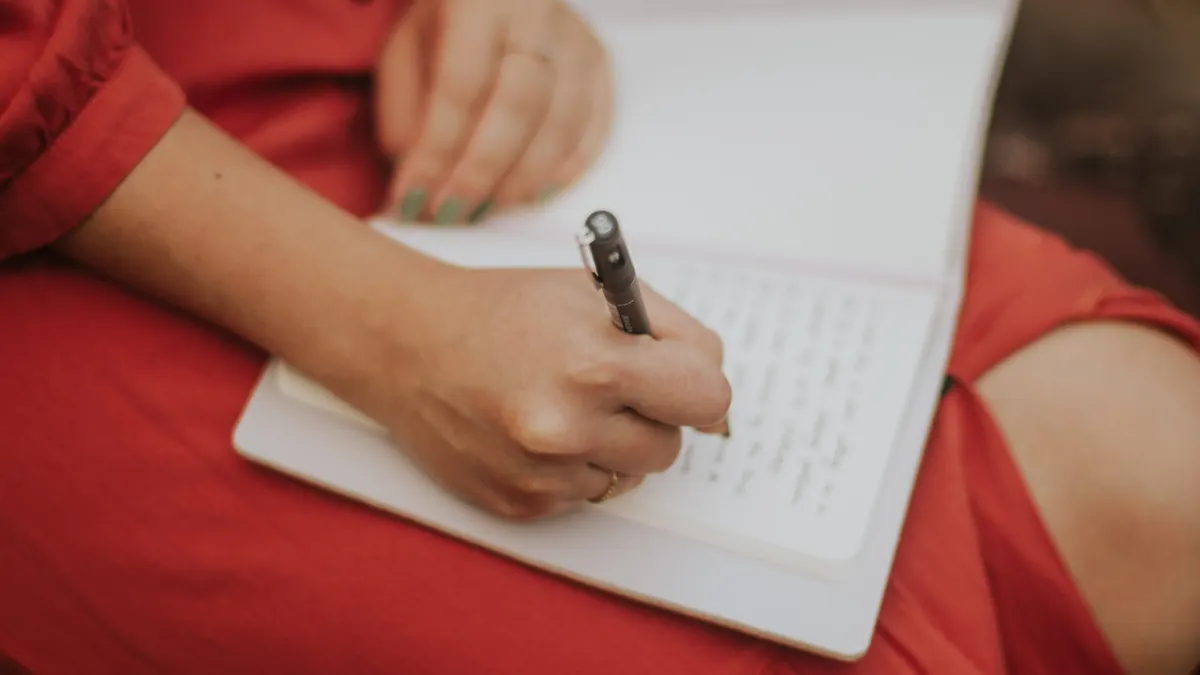
Prompts work because they reduce choice. A blank page forces your brain to answer too many questions at once: What should I write about? How much detail is enough? Where should I start? Am I writing this correctly? That overhead is why even capable writers freeze.
A prompt removes most of that load. Instead of choosing a topic from dozens of possibilities, you answer one question. Instead of making a structure from scratch, you borrow one. The result is often better thinking, not just easier writing.
That is also why prompts can fail. If they are too broad, they behave like a blank page in disguise. If they are too narrow, they feel like homework. The sweet spot is a prompt specific enough to focus attention but open enough to let a real answer emerge.
For example, “What do I want?” is too vague for many people. “What do I want from the next seven days?” is easier to answer. The seven-day frame gives it a useful edge. Time boundaries matter because they create pressure without demanding a life overhaul.
Guided writing is especially useful when emotion is involved. Strong emotion narrows attention, which is useful in some contexts and terrible in others. A structured prompt can help you move from raw feeling to named cause to possible response. That is why clinicians, coaches, and teachers often rely on guided reflection rather than pure freewriting. The structure protects the writer from spinning in circles.
There is a trade-off here. More structure means more clarity, but less surprise. Freewriting can surface thoughts you did not expect. Guided writing can keep you on track when surprise is not the goal. I would choose structure when you need insight you can act on, and less structure when you are exploring without a specific outcome.
Which type should you use for your goal?
Choose the most structured option that still leaves room for honesty. That is the rule I would use.
If you want emotional processing, use open prompts with light guidance. If you want decisions, use tightly guided writing. If you want habits, use short repeated formats. If you want creativity, use prompts that bend rules instead of dictating them.
Here is the practical split:
- For clarity: use one-question prompts and answer in 5–10 minutes.
- For self-awareness: use prompts that compare past and present.
- For action: use prompts that end with “What will I do next?”
- For creativity: use image-based or sentence-starter prompts.
- For healing or stress relief: use gentle prompts with permission to skip details.
A common mistake is using the wrong tool for the job. People reach for “What am I grateful for?” when they actually need to write, “What is making me avoid this conversation?” Gratitude can be useful, but it is not a substitute for problem-solving. In the same way, a deep trauma prompt is a poor choice if you are already overwhelmed and just need to calm down.
I also think duration matters more than most people admit. A 3-minute prompt can be enough on busy days. A 20-minute session makes sense when you are working through a knot. Very long sessions can become performative. Once writing turns into proving something to yourself, the page gets less honest.
If you are new to this, I would start with one prompt, one page, and one timer. Do not stack five prompts at once. That usually turns reflection into clutter.
The real difference between prompts and guided writing
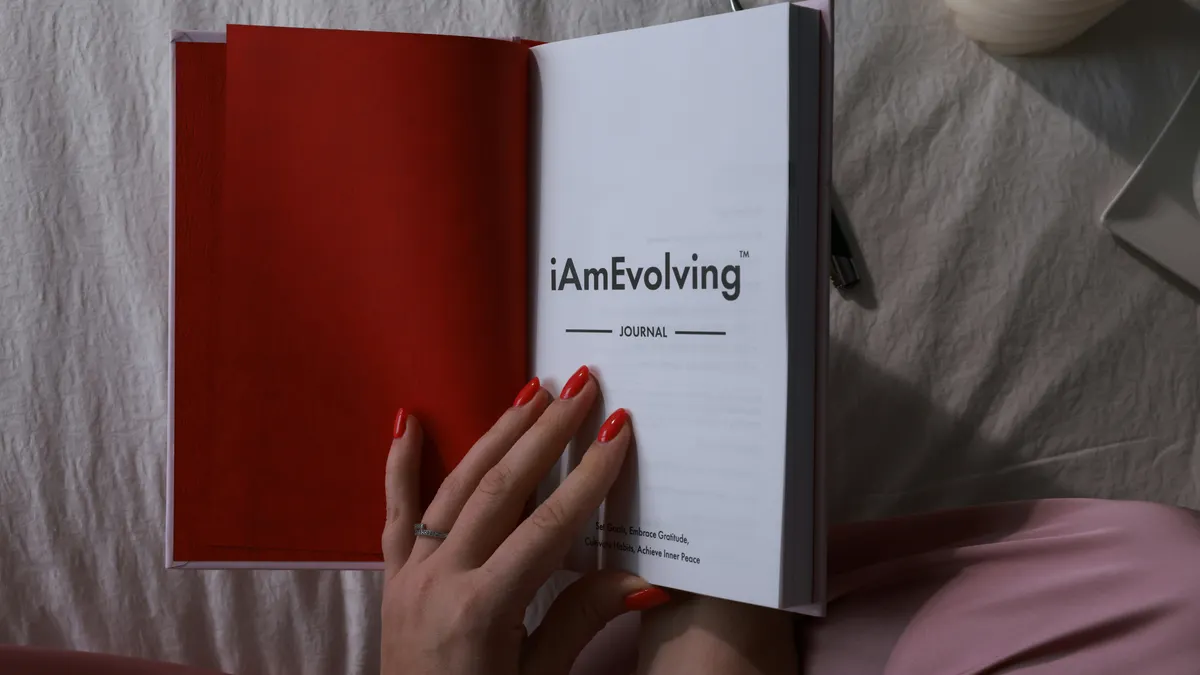
Prompt-only writing is better when you need freedom, speed, and variety. Guided writing is better when you need repeatable structure, deeper focus, or a dependable routine.
A prompt says, “Here is the door.” Guided writing says, “Here is the door, the hallway, and the room.” The second approach is better when you need repeatable results. The first is better when you need personal latitude.
This matters in three common situations. If you are journaling for mood tracking, guided writing helps you compare entries because the format stays stable. If you are journaling for creativity, prompts give you a larger range of response. If you are journaling during a hard season, guided writing can keep you from spiraling because it limits how far you roam.
The downside of prompts is that they can encourage shallow answers if you stay at the surface. The downside of guided writing is that it can feel prescriptive, especially for people who resist rules. That resistance is not a flaw. It is a signal. Some people think more freely when they have total space. Others think better when the page gives them rails.
If you want my plain recommendation: use prompts when you are stuck, use guided writing when you are trying to build a practice, and use a mix when you need both honesty and repetition. A single format is rarely enough for every purpose.
How do I write good prompts that actually get answers?
The best prompts are concrete, time-bound, and answerable in one sitting. A good prompt asks for something you can see, feel, compare, or decide.
Weak prompt: “Reflect on your life.”
Better prompt: “What has felt heavier than usual this week?”
Better still: “What happened this week that I keep replaying, and what part of it still feels unfinished?”
Three design rules matter most.
First, ask about one thing. “Work, relationships, money, and identity” in one prompt is too much. The writer ends up editing instead of thinking.
Second, make the answer measurable in words, not in ideals. “How can I be my best self?” invites performance. “What drained me today?” invites honesty.
Third, leave room for contradiction. People are rarely one emotion at a time. Prompts that allow “part of me wants X, part of me wants Y” produce better self-knowledge than prompts that demand a single clean answer.
A useful prompt often includes a verb that points the mind somewhere specific:
- notice
- name
- compare
- trace
- describe
- list
- choose
- finish
Those verbs do different jobs. “Describe” slows the writer down. “Choose” creates action. “Trace” reveals a pattern. “Name” turns fog into language.
I would avoid prompts that are so polished they sound like self-help slogans. They tend to produce polished answers, not real ones. If a prompt feels like something you would frame on a wall, it is probably too vague to do the work.
How do I use guided writing without overthinking it?
Use a fixed shape and keep the session short. That is the simplest answer.
A basic guided writing session can look like this:
- Set a timer for 5, 10, or 15 minutes.
- Pick one prompt or sequence.
- Write without editing until the timer ends.
- Read once and mark one useful sentence.
- Stop there unless you have a clear next step.
The timer is not a gimmick. It keeps the page from turning into a life project. Ten minutes is enough for many people to get below the obvious layer. Longer is not automatically better.
There are several useful guided structures:
- Three-part reflection: what happened, what I felt, what I need
- Decision page: options, costs, fears, next action
- Letter page: write to a person, a younger self, or a future self
- Pattern page: what keeps happening, what triggers it, what interrupts it
- Reset page: what I can stop, continue, and start
These structures matter because they remove the need to invent the shape of the page while you are already thinking. That is the whole point.
The main risk is rigidity. If a structure becomes a rule you obey instead of a tool you use, it stops being helpful. I would skip guided writing when you are in a phase where your thoughts need wide space, like early creative work or simple free-association for stress relief. But if you are writing for decision-making, habit change, or emotional clarity, structure usually helps more than it harms.
What should a beginner actually do each day?
Start with 5 minutes, one prompt, and one sentence worth saving. That is enough.
Here is a beginner routine that does not try to be heroic:
- Day 1: “What feels unresolved right now?”
- Day 2: “What do I keep avoiding?”
- Day 3: “What has my attention that I have not named?”
- Day 4: “What would make tomorrow easier?”
- Day 5: “What am I assuming is true?”
- Day 6: “What needs less effort?”
- Day 7: “What matters most this week?”
That is a week of useful writing without asking for an identity shift.
The beginner trap is overdesigning the practice. People buy a new notebook, three pens, and a 30-prompt plan, then miss the actual work. The notebook is not the point. The sentence is the point. A plain lined page works fine.
I would also avoid the temptation to answer every prompt with a polished paragraph. Some of the best journal work is ugly, short, and blunt. “I am tired and I do not want to decide this today” is more useful than a page of decorative vagueness. If the page helps you tell the truth faster, it is doing its job.
The honest side-by-side: prompts versus guided writing
| Criteria | Prompts | Guided writing | Winner for [condition] |
|---|---|---|---|
| Starting from a blank page | Easier to begin because the question is immediate | Can feel slower at first, especially with multi-step directions | Prompts for beginners |
| Depth of reflection | Good, but dependent on the prompt quality | Usually deeper because it pushes past a first answer | Guided writing for insight work |
| Consistency over time | Can drift from day to day | More repeatable because the structure stays fixed | Guided writing for tracking patterns |
| Creativity and surprise | Stronger, especially with open-ended prompts | More controlled, which can limit unexpected associations | Prompts for creative exploration |
| Emotional safety | Depends on the wording; a bad prompt can be too sharp | Safer when the structure includes boundaries and gentler steps | Guided writing for fragile days |
| Speed | Usually faster to start and finish | Often slower because it asks for more parts | Prompts for short sessions |
| Decision-making | Useful, but easy to stay abstract | Better because it can force options, trade-offs, and next steps | Guided writing for choices |
| Best fit for beginners | Simple if the prompt is clear and specific | Helpful if the beginner likes structure | Prompts for most first-timers |
| Risk of boredom | Lower if prompts change often | Higher if the same structure is repeated too long | Prompts for variety |
The table points to the real divide: prompts open the door, guided writing shapes the room. If your problem is inertia, prompts win. If your problem is repeating the same thought without resolution, guided writing wins.
Which format should you choose?
Choose prompts if you need a fast start, creative variety, or a low-friction habit. Choose guided writing if you need clarity, repetition, or a process that can carry you from feeling to action. Neither if you are using writing to avoid a problem that needs conversation, therapy, medical help, or an actual decision.
That is the call I would make.
Prompts are the better default for most people because they are easier to begin and easier to sustain. Guided writing becomes the stronger choice when the goal is specific: working through stress, sorting a decision, noticing patterns, or building a practice that actually gives you something back after 10 to 15 minutes.
If you are facing severe anxiety, trauma, depression, or crisis, a page can help but should not stand in for professional support. Writing can organize experience; it cannot replace care.
The clearest way to choose is to ask: do I need motion, or do I need structure? If you need motion, use prompts. If you need structure, use guided writing. If you need both, begin with a prompt and finish with a guided step like “What did I just notice?” or “What do I do next?”
When does the choice flip?
The usual advice flips in four cases.
First, guided writing can be worse if you are highly resistant to structure. A person who feels boxed in by rules may write less, not more, under a step-by-step format. In that case, loose prompts or sentence stems work better.
Second, prompts can be worse if you are emotionally flooded. Open-ended questions can widen the spill. A short guided format with grounding questions is safer and more usable on a rough day.
Third, prompts are the wrong tool when you need evidence of change over time. If you want to compare entries across a month, consistency matters more than novelty, so guided writing wins.
Fourth, neither format is enough if the issue is practical rather than reflective. If the problem is a missed payment, a conflict that needs a message, or a health symptom that needs attention, writing may help you think, but it should not become a substitute for action.
A simple system for choosing the right prompt
Use this three-step filter before you write.
Start with the goal. Ask: am I trying to calm down, understand, decide, remember, or create? That single verb changes the prompt you should use.
Then choose the level of structure. Use one line if you are tired. Use a three-part guided page if you need depth. Use a repeated format if you want tracking.
Then check for fit. A good prompt usually feels slightly uncomfortable but not hostile. If it sounds too cute, it may be too soft. If it sounds too intense, it may be too sharp.
This is also where the biggest generic advice fails. Most lists of prompts assume that more prompts solve the problem. They do not. A pile of prompts can become another form of avoidance. The better move is to pick the right type for the job and stick with it long enough to see whether it helps.
If you want a durable practice, keep three buckets:
- calm-down prompts for stressful days
- clarifying prompts for decisions
- exploratory prompts for creativity and insight
That is enough for most readers. You do not need fifty prompts. You need the right one at the right time.
Key Takeaways
- Prompts get you writing fast; guided writing gets you writing with a shape.
- Specific questions beat broad reflection almost every time.
- Short sessions, around 5 to 15 minutes, are easier to keep honest and useful.
- Use structure when you want clarity or consistency; use openness when you want range.
- If a prompt feels vague, sharpen it with a time frame, a single topic, or a next step.
- If writing starts replacing action, the problem is no longer the prompt.
FAQ
What is the difference between a journal prompt and guided writing?
A journal prompt is a question or cue. Guided writing adds steps, order, or constraints, such as “answer in three parts” or “write for 10 minutes, then summarize one lesson.”
How long should a prompt session be?
Five to 15 minutes is enough for most people. Short sessions are easier to repeat, and repetition matters more than marathon pages.
Are prompts good for mental health?
They can help with reflection and emotional sorting, but they are not a substitute for professional care. If you are dealing with serious distress, talk to a qualified professional.
What if I freeze even with a prompt?
Start with a smaller answer: one sentence, three bullet points, or a single word plus a reason. A smaller response is still a response.
Should I use the same prompts every day?
Use some repetition if you want to spot patterns, and rotate others if you need freshness. A fixed structure plus a rotating question set is often the most useful balance.
Drafted with AI; not yet reviewed by a person.